
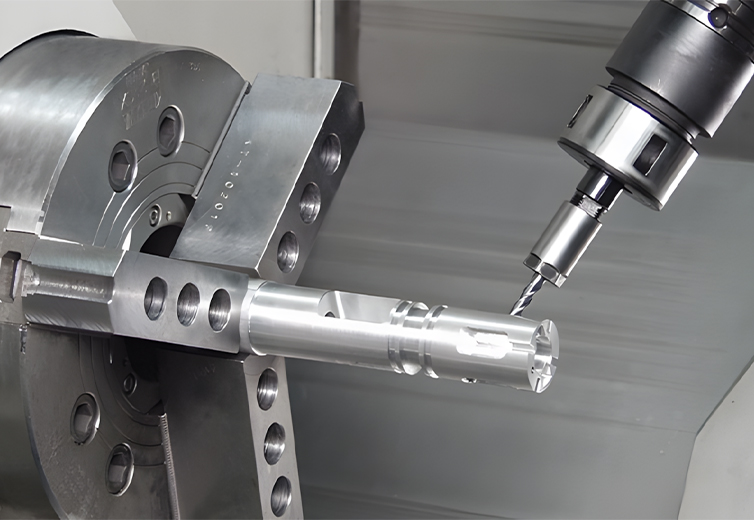
Turning and Milling in One ProcessCustom turn-mill parts with cylindrical surfaces, flats, slots, cross holes, threads, and other milled features produced with fewer transfers between machines.±0.005 mmFewer SetupsIATF 16949Request a Quote
PROCESS ADVANTAGEWhy Use Turn-Mill Machining?Turn-mill machining combines rotational cutting and driven-tool milling, helping reduce part handling while keeping related features aligned to the same machining reference.
Fewer Machine TransfersTurning and secondary milling features can be completed in a more integrated workflow, reducing repeated loading and unloading.
Better Feature AlignmentCross holes, flats, slots, and threads can be positioned relative to turned diameters with fewer re-clamping steps.
Shorter Production FlowA consolidated process can simplify routing, work-in-progress control, inspection planning, and repeat production.
TURN-MILL CAPABILITIESDesigned for Rotational Parts with Milled FeaturesSuitable for precision shafts, valve components, fittings, bushings, connectors, sleeves, sensor bodies, and other multi-feature parts.
±0.005 mmAchievable ToleranceDepending on material, feature relationship, part rigidity, and inspection requirements.
Ø0.5–300 mmTurning DiameterFor small precision components, sleeves, shafts, bushings, and larger rotational parts.
Up to 600 mmPart LengthSpecial dimensions are reviewed according to the part geometry, bar size, and machining strategy.
Turning + Driven-Tool MillingCombined OperationsTurned diameters can be combined with flats, slots, cross holes, keyways, grooves, and threaded features.
50+MaterialsSteel, stainless steel, aluminum, brass, copper, titanium, and engineering plastics.
PPAP · FAI · CMMQuality DocumentationInspection reports, material certificates, and project-specific quality records are available.
FEATURES WE MACHINEComplex Features in One Coordinated ProcessThe exact process route is selected according to feature relationships, tolerance stack-up, and production volume.
Cross HolesFlatsSlotsKeywaysInternal ThreadsExternal ThreadsGroovesAngled FeaturesSealing Surfaces
TURN-MILL QUALITY FOCUSInspection Built Around Feature RelationshipsTurn-mill parts often require precise relationships between diameters, faces, holes, and milled features.
01Concentricity and RunoutControl of rotational surfaces and related diameters according to drawing requirements.
02Feature PositionVerification of milled flats, cross holes, slots, and threads relative to the primary turned datum.
03Thread and Surface ControlThread gauges, surface checks, and drawing-defined inspection methods are applied as required.
04Burr and Edge ManagementSpecial attention is given to cross-hole intersections, slots, threads, and sealing areas.
PROJECT PLANNINGFrom Feature Review to Stable ProductionThe process is planned around feature sequence, datum control, tool access, inspection, and production repeatability.
STEP 01Feature and Datum ReviewWe review the relationship between turned and milled features, critical datums, tolerances, and inspection requirements.
STEP 02Operation PlanningTool access, machining sequence, workholding, burr control, and measurement strategy are defined.
STEP 03First Article and ValidationSamples and agreed quality records are prepared for review before repeat production.
STEP 04Controlled Repeat ProductionAfter approval, the process moves into controlled production with ongoing inspection and traceability.
MATERIAL OPTIONSMaterials for Turn-Mill PartsMaterial selection is based on function, machinability, strength, corrosion resistance, and surface treatment requirements.
AluminumStainless SteelCarbon SteelAlloy SteelBrassCopperTitaniumEngineering Plastics
COMMON APPLICATIONSParts That Benefit from Turn-Mill Machining
Valve BodiesControl ShaftsSensor HousingsHydraulic FittingsThreaded ConnectorsPrecision BushingsRotary Components
KINGTEAMWhy KingTeam for Turn-Mill Parts?
Setup-Reduction FocusProcess planning focuses on reducing unnecessary transfers while protecting critical feature relationships.
Automotive Quality DisciplineExperience with IATF 16949 requirements, PPAP, process capability, and traceable manufacturing.
Prototype-to-Production SupportEngineering review, sample validation, and scalable production support are available for repeat projects.
PROJECT INQUIRYHave a Complex Turn-Mill Part?Send us your drawing. Our engineers will review feature relationships, tolerances, material, inspection requirements, and production volume.Send Your Drawing
FAQFrequently Asked Questions
When Should I Choose Turn-Mill Machining?It is especially useful for rotational parts that also require flats, slots, cross holes, threads, or other milled features.
How Is Turn-Mill Different from Separate Turning and Milling?Turn-mill machining can combine more operations into one coordinated process, reducing part transfers and helping maintain feature alignment.
Can You Machine Cross Holes, Flats, Slots, and Threads?Yes. Feasibility depends on tool access, feature depth, orientation, part size, and the selected machine configuration.
What Tolerances Can You Achieve?Depending on the material, geometry, and feature relationship, tolerances down to ±0.005 mm are achievable.
What Quality Documents Can You Provide?Depending on the project, we can provide CMM reports, FAI, PPAP documentation, material certificates, and other quality records.
What Information Do You Need for a Quote?Please provide drawings or 3D files, material, quantity, tolerances, surface finish, and inspection requirements.