

Cold forged parts, made to your drawing.KingTeam provides custom cold forged parts. For suitable batch projects, we can forge a blank and then machine the features needed for the finished component. Send your drawing and quantities so we can assess the complete route.Tooling, forging and secondary machining are reviewed together for your part.Email your drawingsContact KingTeamAI-generated illustration: examples of headed and shouldered parts.
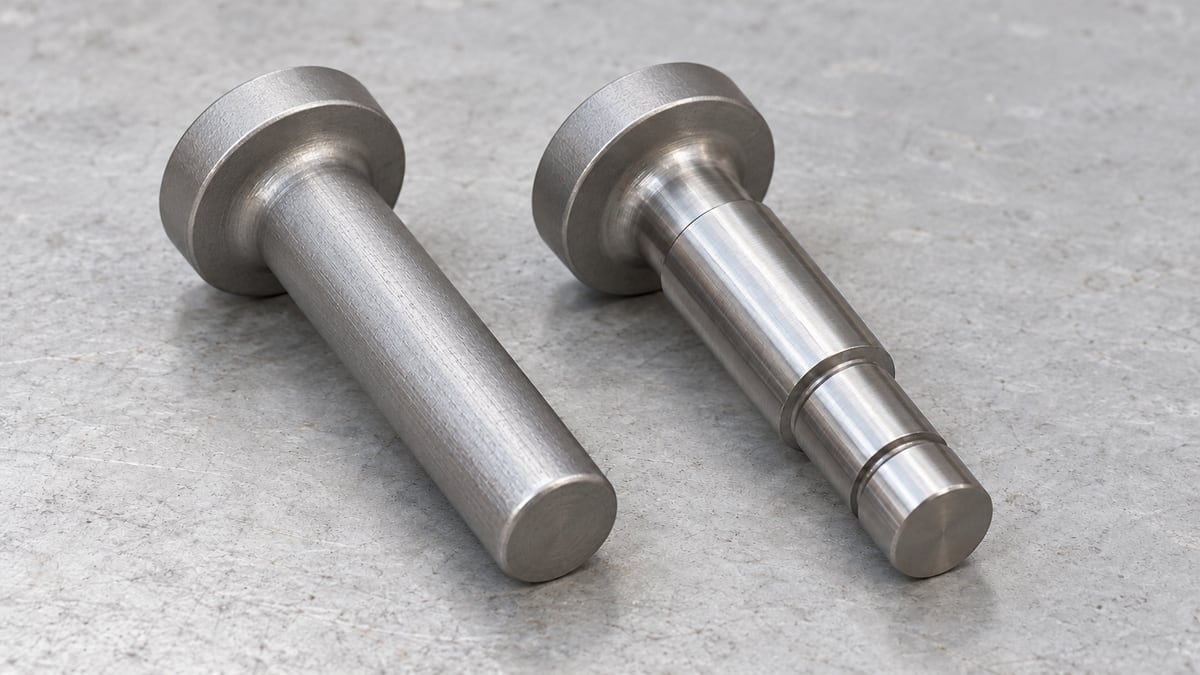
A formed blank (left) and a machined example (right).
Cold forging capabilities
Cold forging shapes metal under pressure at or near room temperature. The material grade and geometry determine which features can be formed and where later machining may be needed.
Equipment11 forging machines, with the equipment and tooling route selected for the part.
Production capacityUp to 2.2 million pieces per month, depending on the part mix and tooling. Capacity for your order is confirmed during project review.
MaterialsSpecify the material grade and supply condition. Formability and any material preparation are reviewed before tooling is agreed.
Custom partsHeaded, shouldered and other small formed components are assessed against your drawing. Special shapes need an individual feasibility review.
Forged blanks and machiningFor suitable batch projects, we can forge a blank and then machine the features required by the finished-part drawing.
Order informationInclude the first batch, repeat demand and any expected design changes so tooling costs can be assessed with the complete production route.
Define the formed and machined features
Identify the features that control assembly and the surfaces that need machining. Agree the forged shape and machining allowance before tooling.
Material and forming geometryReview the grade, material condition and changes in section before tooling. Radii and transitions need to suit the forming route and the part's function.Datums and machining allowanceIdentify the locating faces and leave suitable stock on surfaces that need machining. The blank must support a stable setup for the later operations.Acceptance of the finished partAgree critical dimensions, surface condition and edge requirements. Identify material evidence and inspection records needed with the finished components.
Forging followed by machining
For volume orders, a forged blank can establish the main shape before selected features are machined. Assess the tooling and remaining machining work together.
Blank designAgree the formed outline and machining stock from the finished-part drawing. Allowance is needed only where the chosen route calls for it.Final featuresIdentify shoulders, grooves, holes or threads that need secondary machining. The process for each feature is agreed during drawing review.Complete-route costCompare tooling investment and expected tool life with material use, setup and machining work. The suitable quantity depends on the part and demand.Finishing requirementsState any heat treatment, coating or surface finish needed. Feasibility and the operation sequence are agreed with the material and dimensional requirements.
From enquiry to production
Requirements and approvals are agreed at each stage.
1Send the part drawingMaterial grade, final dimensions, finish, critical features and expected quantities.2Agree the production routeReview the forged shape, machining stock, tooling and inspection requirements.3Approve the samplesCheck the agreed dimensions, assembly fit and surface condition before release.4Produce and deliverProceed with the agreed operations, final inspection and delivery arrangements.
Frequently asked questions
Practical questions when planning cold forged components.
Can you forge a blank and machine it afterwards?Yes. For suitable batch projects, we can forge the blank and then machine the final features. Send the finished-part drawing so both stages can be assessed together.When does a forged blank make sense?It is worth assessing when repeat demand can support the tooling investment and the part has a suitable formed shape. Compare the full route with direct machining, including material use and later operations.Which materials can be used?Send the grade, required properties and material condition. Cold formability varies by alloy and condition, so material suitability is confirmed with the part geometry.Does ±0.02 mm apply to every feature?The stated tolerance needs confirmation for the feature and production route. Mark the dimensions that control function and agree whether they will be formed or machined.Is there a minimum order quantity or standard lead time?Quantity and timing are confirmed after review. Tooling work, material preparation, sample approval, machining and finishing affect the quotation and schedule.What should I include in an enquiry?Send a dimensioned drawing and model where available, material grade, finish, critical tolerances, batch quantity and repeat demand. Include inspection requirements and any planned design changes.
Discuss your cold forging project.Email your finished-part drawing, material and quantities. We can review a forged blank and machining route where it suits the project.kingteam@kingteam-cn.comContact details