

Bent sheet metal for brackets and enclosures.KingTeam provides sheet metal bending services for brackets, channels, covers and equipment enclosures. We review the material, bend geometry and assembly dimensions from your drawing before agreeing the manufacturing route.Send the finished-part drawing and model. Include a flat pattern if one is available.Email your drawingsContact KingTeamAI-generated illustration: examples of folded sheet metal parts.
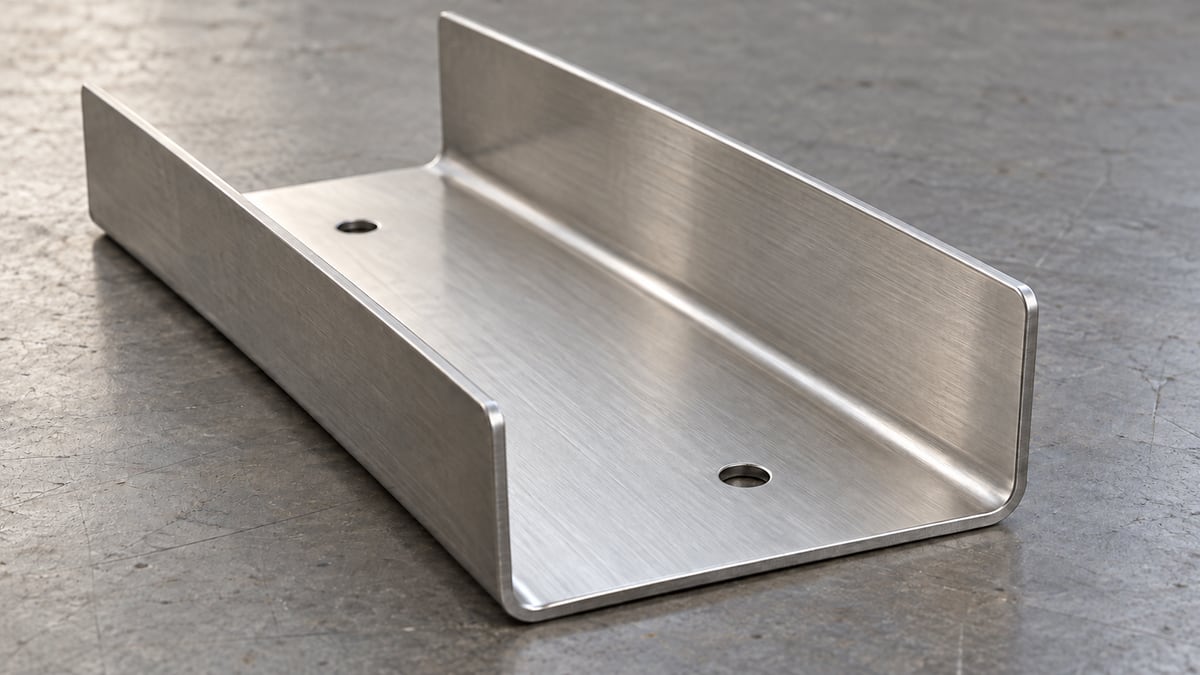
Sheet metal bending capabilities
Press brake bending forms a flat blank into flanges and angled sections. Material properties and tooling affect the bend radius, flange length and force required.
Materials for reviewSteel, stainless steel, aluminium and copper. Specify the grade and temper because formability varies.
Thickness and bend lengthAssessed together with the material strength, tooling and part geometry. Send the full drawing for confirmation.
Bend radii and anglesSpecify the inside radius, finished angle and measurement convention. Springback and tool selection need to be considered.
Holes and cut-outsKeep assembly features clear of the bend zone where possible. Features near a bend may distort and need review.
Finished-part tolerancesIdentify the datums, critical flange dimensions and overall envelope. Agree how dimensions will be checked after forming.
Production quantitiesInclude prototype quantities and repeat demand, plus any planned welding, inserts or finishing for review.
Check the part in its formed condition
Check the finished component against the assembly drawing, including dimensions across bends and visible surfaces.
Bend sequence and tool accessReview short flanges, close bends and return features early. The forming sequence must leave space for the tooling and the part.Datums and assembly fitShow the reference faces and the distances that control mounting. A dimension across several bends needs a clear inspection setup.Surface and edge conditionIdentify visible faces and protected surfaces. Agree acceptable tooling marks, edge condition and any checks for cracking at bends.
Finishing for formed parts
Review finishing with the bending route. Specify appearance and functional requirements before manufacture.
Deburred edgesDefine the required condition of cut edges and holes, including edges that will be hard to reach after bending.Brushed or bare metalIdentify the visible face, grain direction and acceptable handling marks. An appearance sample can help set the requirement.Coatings and anodisingSpecify the required finish for the material. Review colour, thickness and masking, including any effect on assembly fit.Welding and insertsNote any joints, studs or threaded inserts. Their positions and the operation sequence need review alongside the bend geometry.
From enquiry to production
Requirements and approvals are agreed at each stage.
1Send the part dataFinished-part drawing, model, material, thickness, finish and quantities.2Review the forming routeAgree bend geometry, critical dimensions and any proposed design changes.3Approve the samplesCheck fit, formed dimensions and appearance against the agreed requirements.4Produce and deliverComplete the agreed operations, final checks and handling for delivery.
Frequently asked questions
Practical questions for folded sheet metal components.
Should I send a flat pattern or a 3D model?Send the finished-part model and dimensioned drawing. An existing flat pattern is useful, but its bend allowance needs checking against the chosen material and tooling.What bend radius should I specify?The suitable radius depends on the material grade, temper, thickness and tooling. Show any functional radius on the drawing. We can review it with the rest of the geometry.How close can a hole be to a bend?The distance depends on the bend radius, material thickness and tooling. Show the hole position and its functional tolerance so the risk of distortion can be assessed.What tolerances can you hold?Angle and linear tolerances are confirmed for the finished part. Identify the critical assembly dimensions and datums; a tolerance across multiple bends needs particular attention.Can bent parts include cut-outs and inserts?Include all cut-outs, holes and insert requirements in the part data. We review them with the forming sequence and access needed for later operations.What affects price and lead time?Material, blank size, number of bends, tool access, batch quantity and finishing all affect the route. Sample approval and inspection requirements also need to be included in the schedule.
Discuss your sheet metal bending project.Send the finished-part drawing, material and thickness. Mark the dimensions and visible surfaces that matter in your assembly.kingteam@kingteam-cn.comContact details