
What to confirm before comparing prices and approving a material change.
Before ordering a replacement in lead-free brass, confirm the exact grade, agree the checks needed for the change and compare quotations on the same basis. Keep trial costs separate from the repeat-production price. These steps help buyers see what they are approving and what the supplier has priced.
Changing the alloy is a little like changing paper while keeping the same print layout: the intended result stays the same, but the process may need adjustment. A drawing with unchanged dimensions can still require a fresh manufacturing review.
Give suppliers the full replacement material specification. The label "lead-free brass" alone leaves room for different interpretations.
Include the grade, applicable material standard, supply condition and stock form, such as round bar or a forged blank. State the permitted lead content and any alternative grades approved by your engineering team.
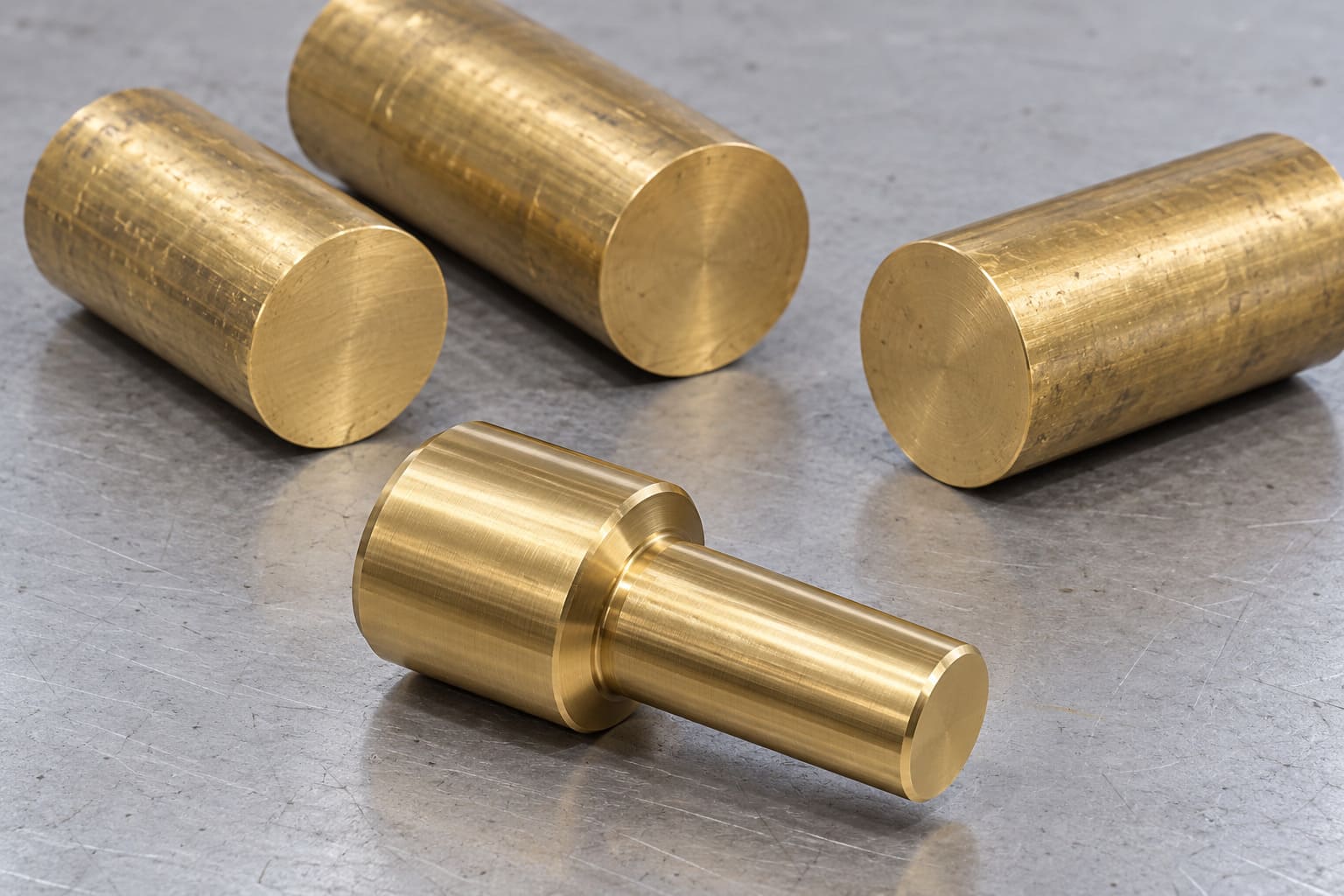
Solid brass round-bar stock beside a turned stepped shaft.
Send the original specification alongside the revised one. If a supplier proposes an equivalent grade, ask engineering to approve it before placing the order. A grade approved for bar stock also needs review if the planned route includes forging.
Each supplier should use the same drawing revision, approved grade, batch size and annual demand. Check whether the price includes surface finishing, burr removal and the agreed inspection.
Ask for trial or tooling costs to be identified separately from the repeat unit price. Confirm material availability and whether trial approval is needed before the production lead time can be confirmed.
If a price or schedule depends on the trial outcome, ask which assumptions remain provisional and what could change. This gives procurement a clearer basis for comparing offers and planning the order.
Ask the supplier what needs checking on the actual part and whether the trial affects the price or lead time.
An alloy change can alter how the metal breaks into chips during cutting. Ask whether chip removal needs testing on features with restricted space, such as small holes or threads.
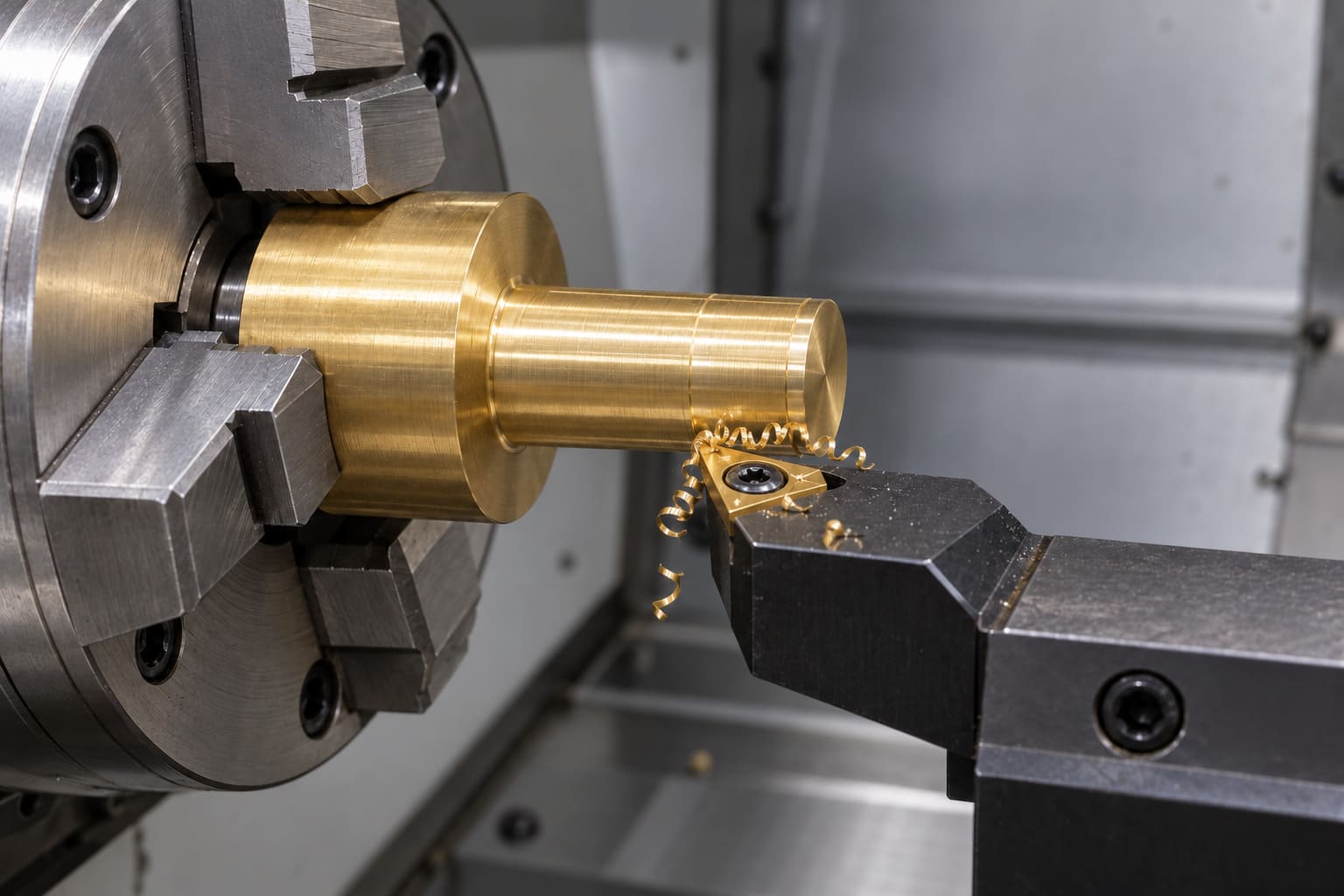
External turning of a solid brass stepped shaft.
A 2026 Materials & Design study reported different chip behaviour for the brass grades it tested. The work used short, dry external-turning tests; it does not establish production tool life or results for drilling and other operations. [1]
For your order, agree which features the trial should include and which results are needed before the repeat-production quotation is finalised. Procurement can leave cutting parameters to the supplier while making the required outcome clear.
Make sure the inspection plan covers the features that determine whether the part fits and functions.
For example, a shaft diameter can be within tolerance while a sharp burr near a seal damages it during assembly. Mark burr-sensitive edges on the drawing and agree how they will be accepted.
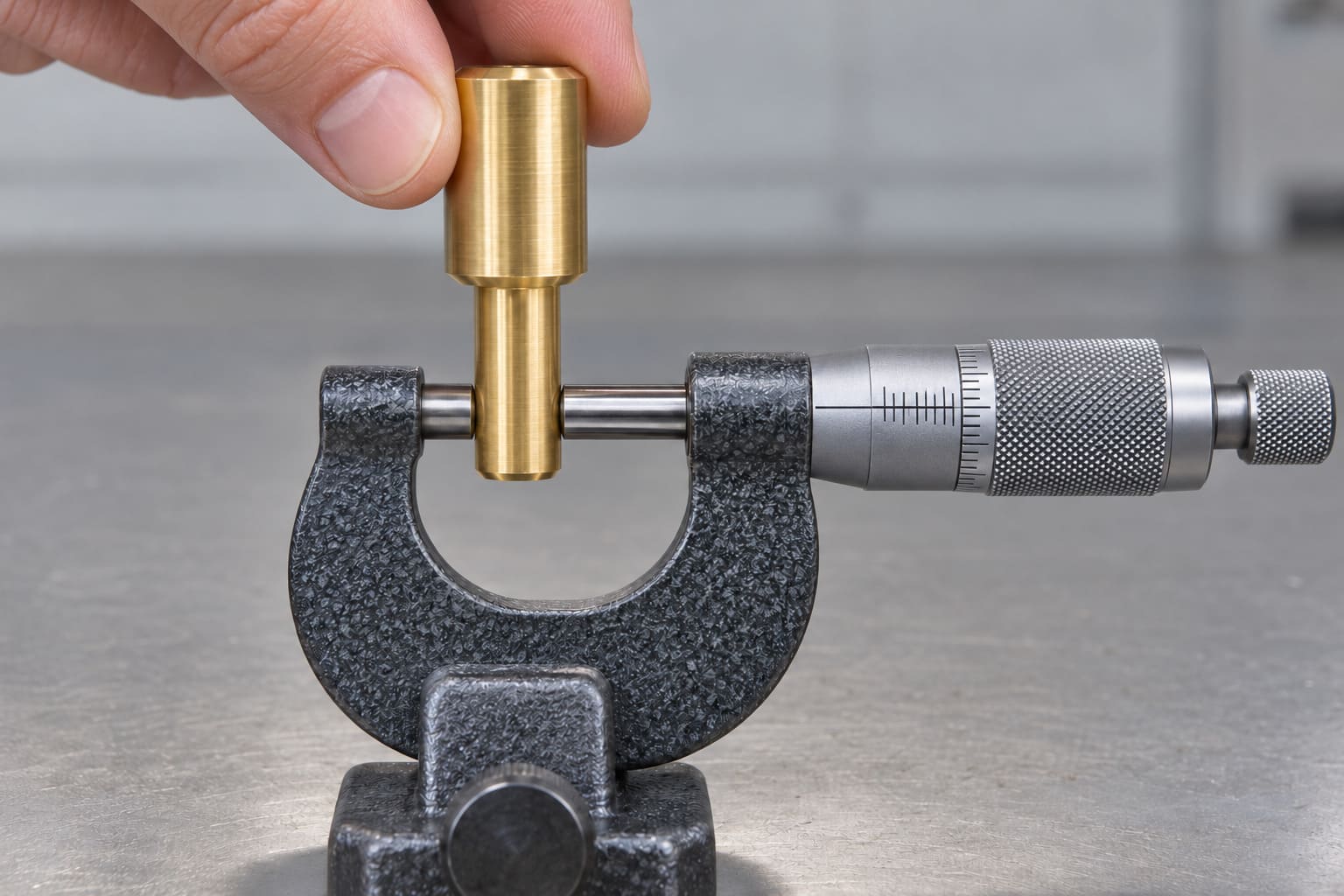
Measuring a smooth shaft diameter with an outside micrometer.
Match the inspection method to the feature. An outside micrometer can check a smooth shaft diameter; threads should be checked with the specified gauges. Sealing faces need their own agreed requirements.
Where the part will be plated or otherwise finished, confirm which dimensions and threads must be checked after finishing. Approve a representative finished sample if appearance forms part of the acceptance criteria.
The customer's engineering team should confirm that the replacement material suits the application, including the operating conditions and specified finishing requirements. Keep this decision separate from the supplier's confirmation that it can machine the part.
Agree who will approve the grade, sample and inspection requirements, and what evidence they need. Procurement can then tell whether an order is ready for release or still waiting for a decision.
KingTeam provides CNC turning, milling, Swiss machining, forging and stamping, and can coordinate surface finishing requirements. To discuss a brass component or material change, send your drawing, material specification, surface finish, critical tolerances and expected volumes to kingteam@kingteam-cn.com. We can then discuss the machining and inspection requirements.
Technical reference
Sharghivand et al., On the microstructural strategies adopted for achieving improved machinability in commercial brass alloys. Materials & Design 267 (2026), 116270. First available online 22 May 2026.
[1] Publisher recordOpen-access paper
Images are AI-generated illustrations, not photographs of KingTeam facilities or evidence of material composition or test results.
 RETURN_LIST