
How to specify punched holes, cut edges and bends before you compare quotes.
If the drawing calls for zinc on the cut edges or hole walls, plan to coat the bracket after stamping and deburring. If the exposed edges are acceptable in service, pre-galvanised sheet is worth quoting. Using sheet that arrives already coated can remove a separate finishing operation from the order.
Take a U-shaped support bracket with two bolt clearance holes. If it sits beneath a machine frame that gets washed down, water can reach the mounting holes and the sheared perimeter. Start by asking the design engineer which of those surfaces need a coating on the delivered part.
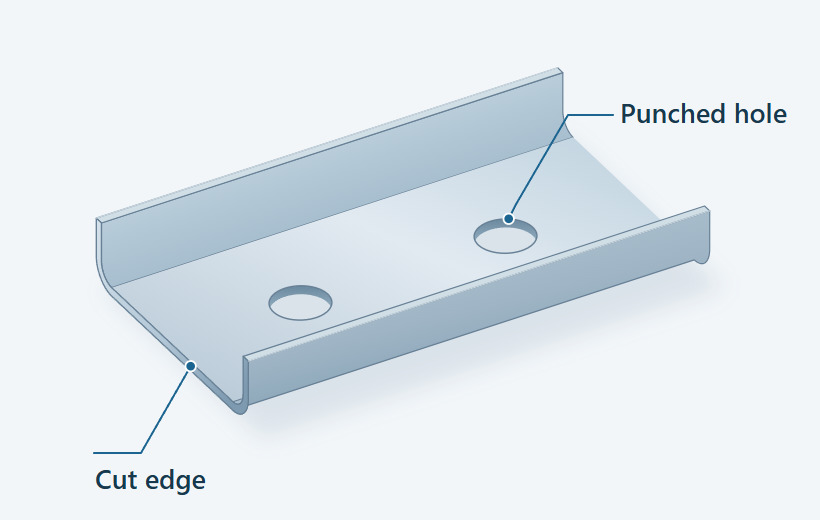
Punching and blanking expose new steel at the holes and outer edges of this U-shaped bracket. Technical illustration.
With pre-galvanised sheet, the mill coats both broad faces before the bracket is made. Blanking cuts the outer profile, and punching creates the two holes. Both operations expose steel through the thickness of the sheet. Picture cutting a piece of laminated card and seeing the core along the edge.[1]
Nearby zinc can still protect some exposed steel by corroding first. How much protection the edge gets depends on the width of the exposed face, the available zinc and the service environment. Punching can also drag a little zinc onto the cut face. For the washdown bracket, tell the supplier if water pools around the bolts or if cleaning chemicals reach the edges.[2]
The outside of the bend is a separate check because forming stretches that surface. On a sample made from the proposed sheet, look for coating damage at the tightest bend and agree what the design will accept.
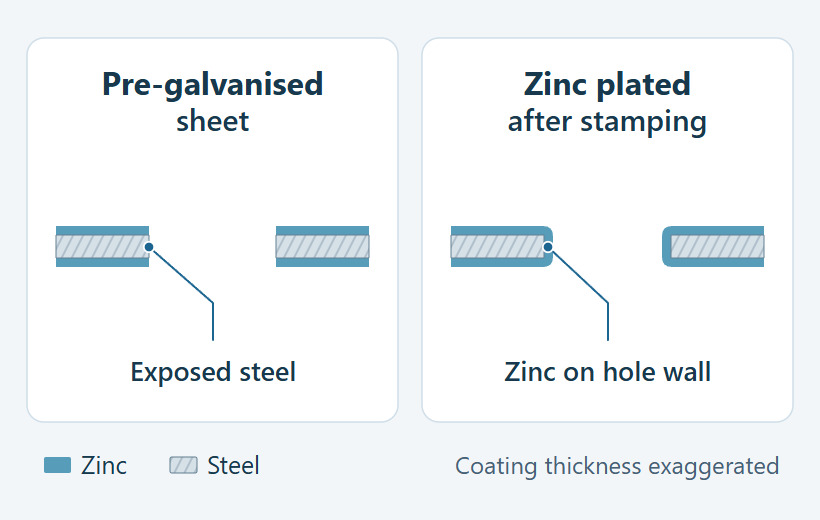
Zinc can reach the wall of this mounting hole when the bracket is plated after stamping. Technical illustration.
One route is to stamp bare steel, deburr it and then electroplate the bracket with zinc. The zinc can deposit on the newly cut perimeter and inside the open mounting holes as well as on the broad faces. Plating thickness can vary with geometry, so the reading on a flat face may differ from the thickness on the hole wall.[3]
Mark any cut face or hole wall that needs a local minimum thickness, and ask the supplier how it will be checked on the formed part. If a bolt is already a close fit, give the supplier the required hole size in the finished condition so they can allow for the coating where necessary.
If the finisher uses rack plating, ask where the rack will make electrical contact. It can leave a small bare spot. Agree where a contact mark is acceptable, particularly if the finisher plans to hang the bracket by a hole that needs coverage.[4]
On 1 October 2026, the Dutch standards body NEN published NEN-EN 10346:2026. It covers delivery requirements for continuously hot-dip coated steel flat products for cold forming. When you specify pre-galvanised stock, give the steel grade, sheet thickness and coating designation. Use the part drawing to state the condition you require at punched edges and bends.[5]
If the part will be plated after stamping, name the applicable finish specification. ASTM B633, for example, covers electrodeposited zinc on iron and steel. Include the coating thickness and any required supplementary finish. If the drawing simply says ‘zinc-coated’, ask the designer to confirm the intended route or whether suppliers can propose either one.[6]
KingTeam makes stamped metal parts and can handle the specified surface finish. If the drawing leaves the process open, tell us where the bracket will be fitted. We can quote for the stamped and finished part and identify any hole size or cut-edge requirement that needs agreement first.[7][8]
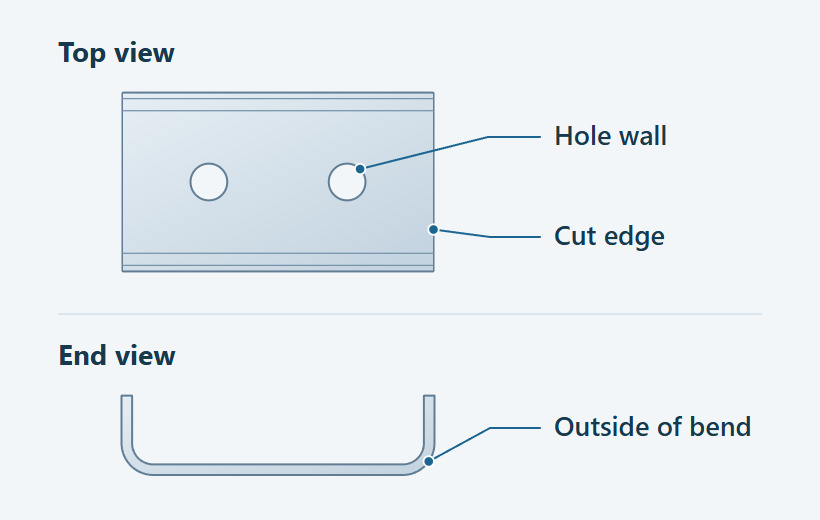
Use the formed sample to check the hole wall, cut edge and outer bend. Technical illustration.
Ask each supplier to state the starting material, when coating takes place and which surfaces they will check. For a route with a separate plating step, check whether the price and lead time account for it. If corrosion testing is required, give every supplier the same method, acceptance criteria and surfaces to assess.
Give each supplier the same sample and production quantities. A minimum finishing charge, if one applies, can affect the unit price for a small lot.
Before approving a route, ask for a bracket made with the material and finishing sequence in the quote. Look at the punched holes and outer bends, and confirm the finished hole size where fit matters. A flat sheet sample can show the condition of the incoming material. A formed bracket shows what happened to the coating at the edges and bends.
Email your drawing, material specification, surface finish, critical tolerances and expected volumes to kingteam@kingteam-cn.com. We can discuss the stamping and inspection requirements for your part before quotation.
 RETURN_LIST